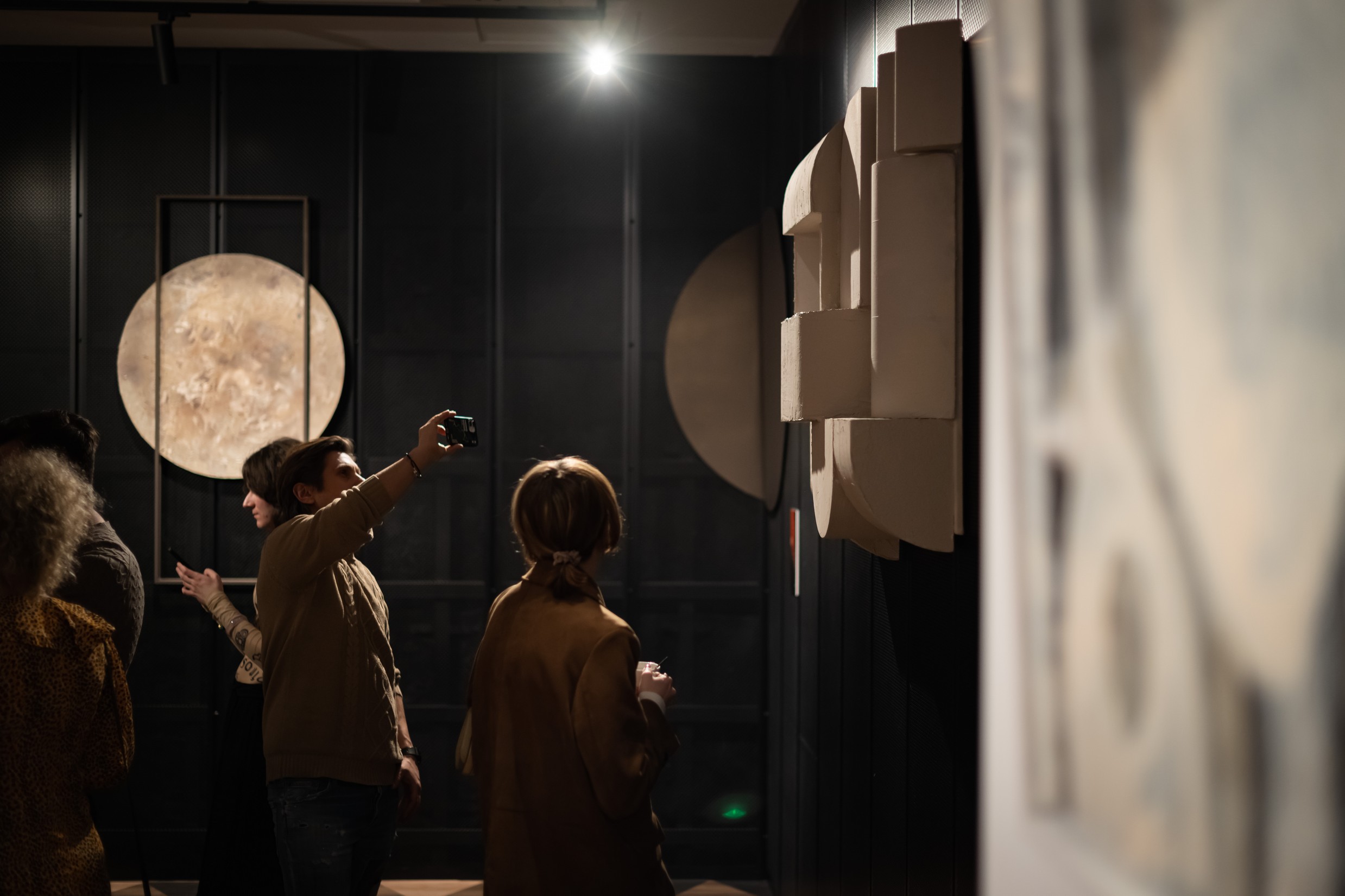
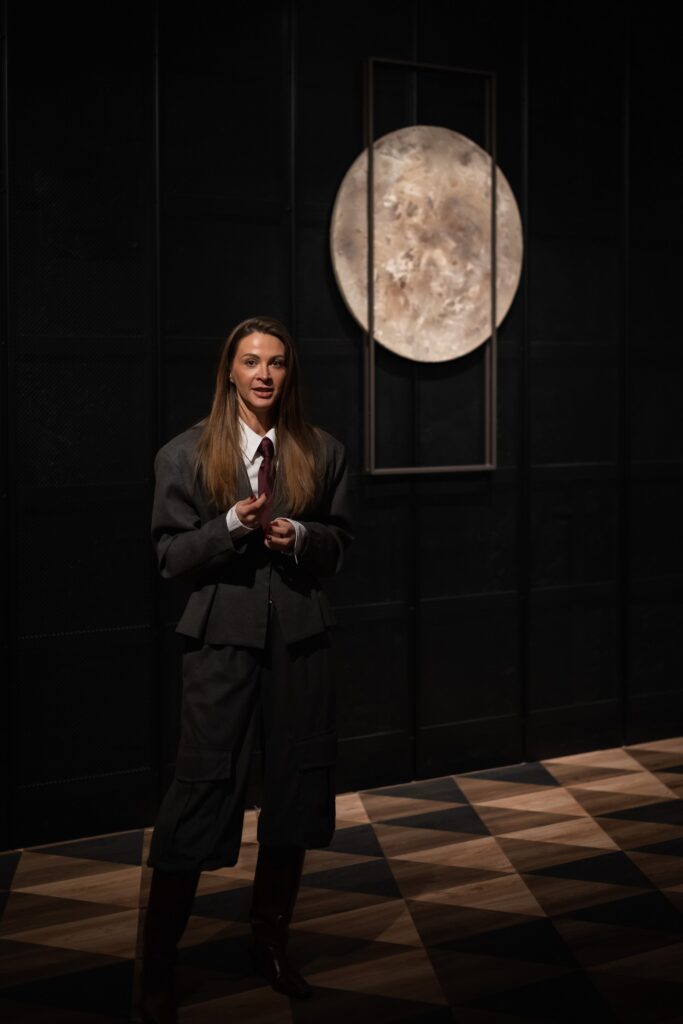
2025/ oil, acrylic, and concrete on canvas, metal frame
It can be moon
The large oval form, almost lunar or geological, reads less as a painted image than as a surface shaped by erosion and accumulation. The handmade linen canvas deepens this tactile, archaeological quality. The material is a mineral skin bearing atmospheric traces....
Read more...
Materials associated with construction and industrial surfaces are displaced into the field of painting, shedding their utilitarian function to become carriers of memory: walls, concrete, dust, weathering, urban decay. The surface moves between the cosmic and the terrestrial. From a distance it suggests a moon, a ritual disc, or an astronomical relic. Up close, abrasions, sedimentations, and chemical textures surface, evoking geological process and oxidation. The work thus exceeds decorative abstraction, settling into an intermediate zone among landscape and memory. The steel structure surrounding the canvas is equally decisive. The rectangular frame cuts through and suspends it, generating tension between the oval, with its connotations of continuity, cyclical time, celestial bodies, and organic presence, and the industrial rectangle, which speaks of architecture, measurement, control, and structural systems. By holding the disc within the steel frame, the work resists a purely frontal reading and becomes something closer to a portal. Light is essential, activating the surface, revealing subtle material shifts, and keeping the painting in apparent transformation. Acrylic, oil, and sun spray reinforce this unstable materiality. The surface seems produced through layering, reaction, dispersion, and atmospheric effect, aligning the piece with contemporary approaches that treat painting less as representation than as an ecological and material process. The strength of the work lies in its ambiguity as it holds together architecture and cosmology, industrial matter and an almost sacred presence.
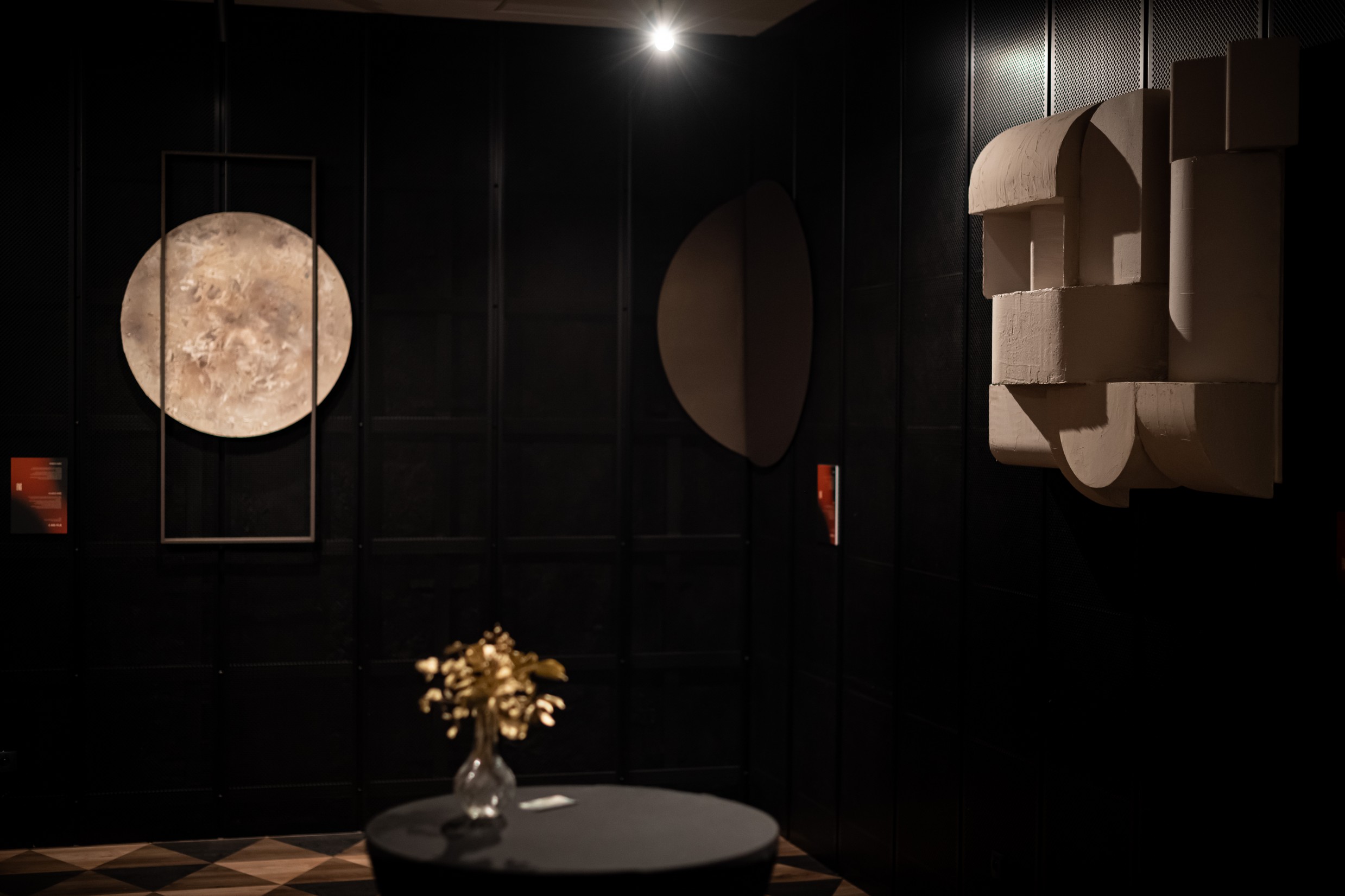
2025/ concrete and acrylic on expanded polymer forms
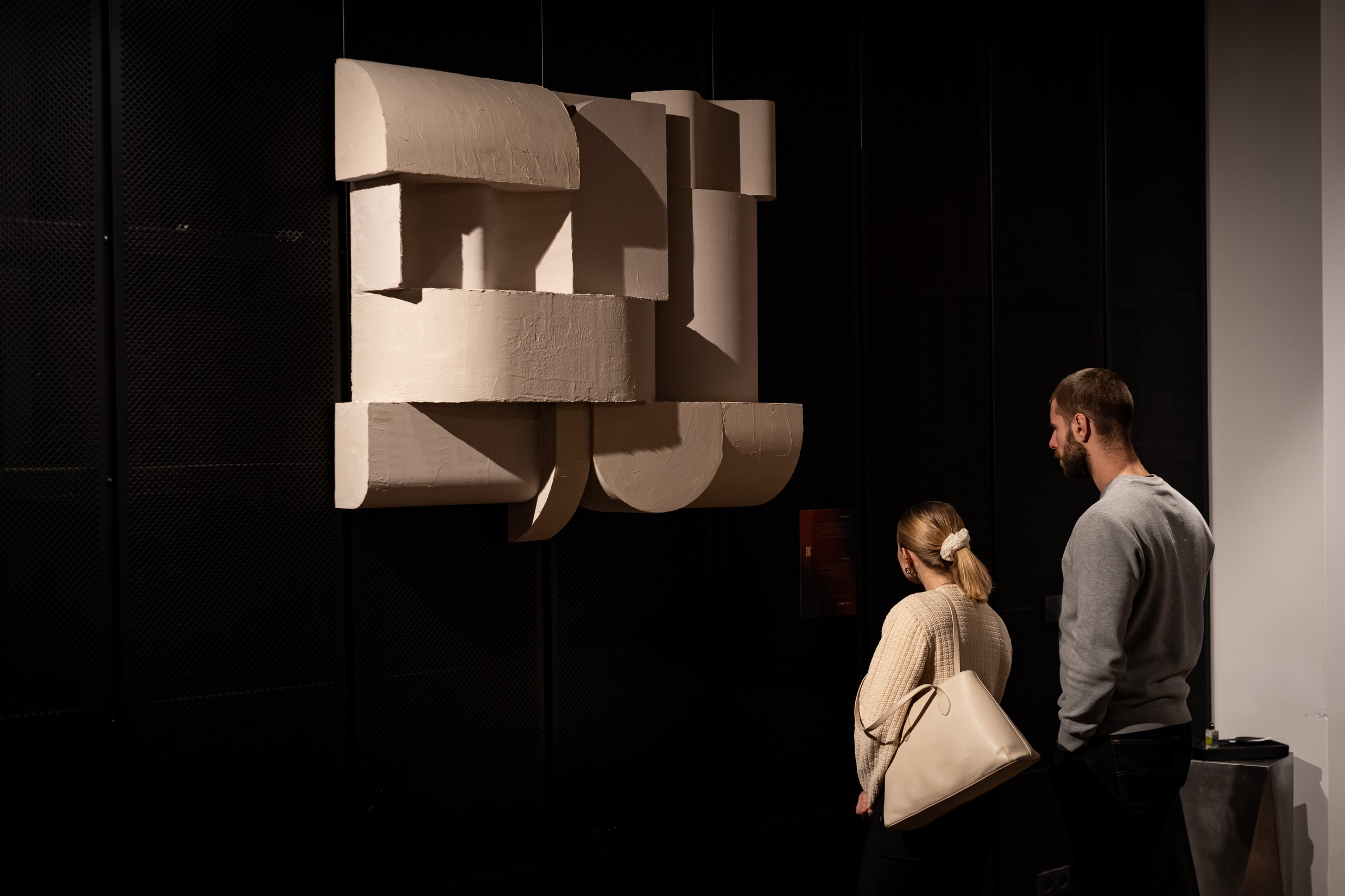
Lens
Lens explores the instability of perception through a form that shifts according to the viewer’s position. What appears coherent from one angle dissolves into fragments from another, revealing reality as contingent rather than fixed. The work transforms vision into an active process, shaped by movement, perspective, and interpretation...
Read more...
This work keeps its form and transforms the way that form is perceived. Built from elements that rearrange themselves according to the viewer’s position, it exposes the instability of the image we tend to accept as “reality.” What looks coherent and legible from one side dissolves into fragments from another, which is a shift that arises from the partiality of perception itself and not from flaws in the form. The lens becomes a metaphor for contemporary experience. It is a world filtered through screens, algorithms, and narratives, in which we move constantly between different versions of the same reality. The work holds every truth as contingent, dependent on the place from which we choose to look.
2025/ acrylic, oil, and resin with industrial metal shavings on canvas
Active version
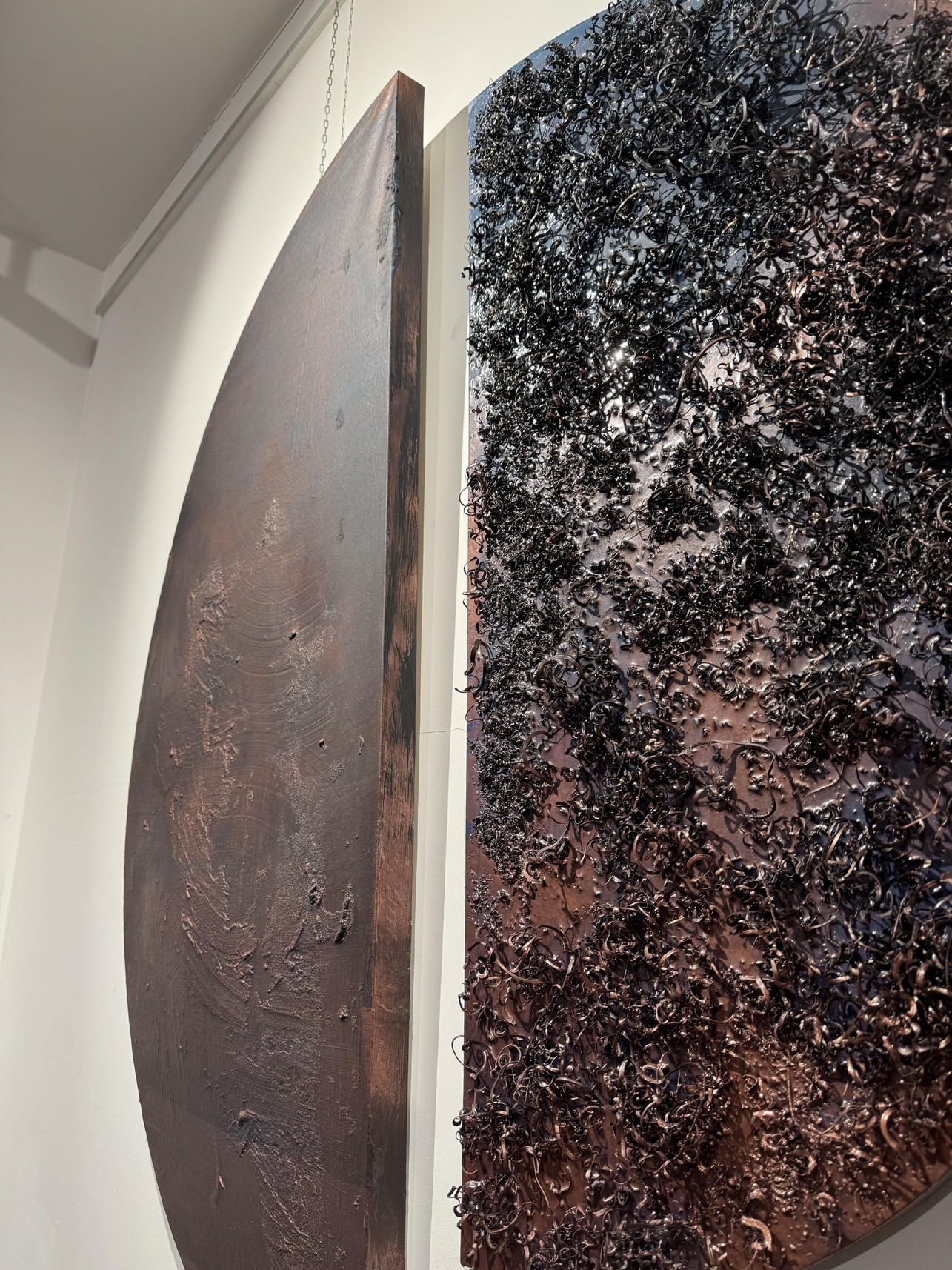
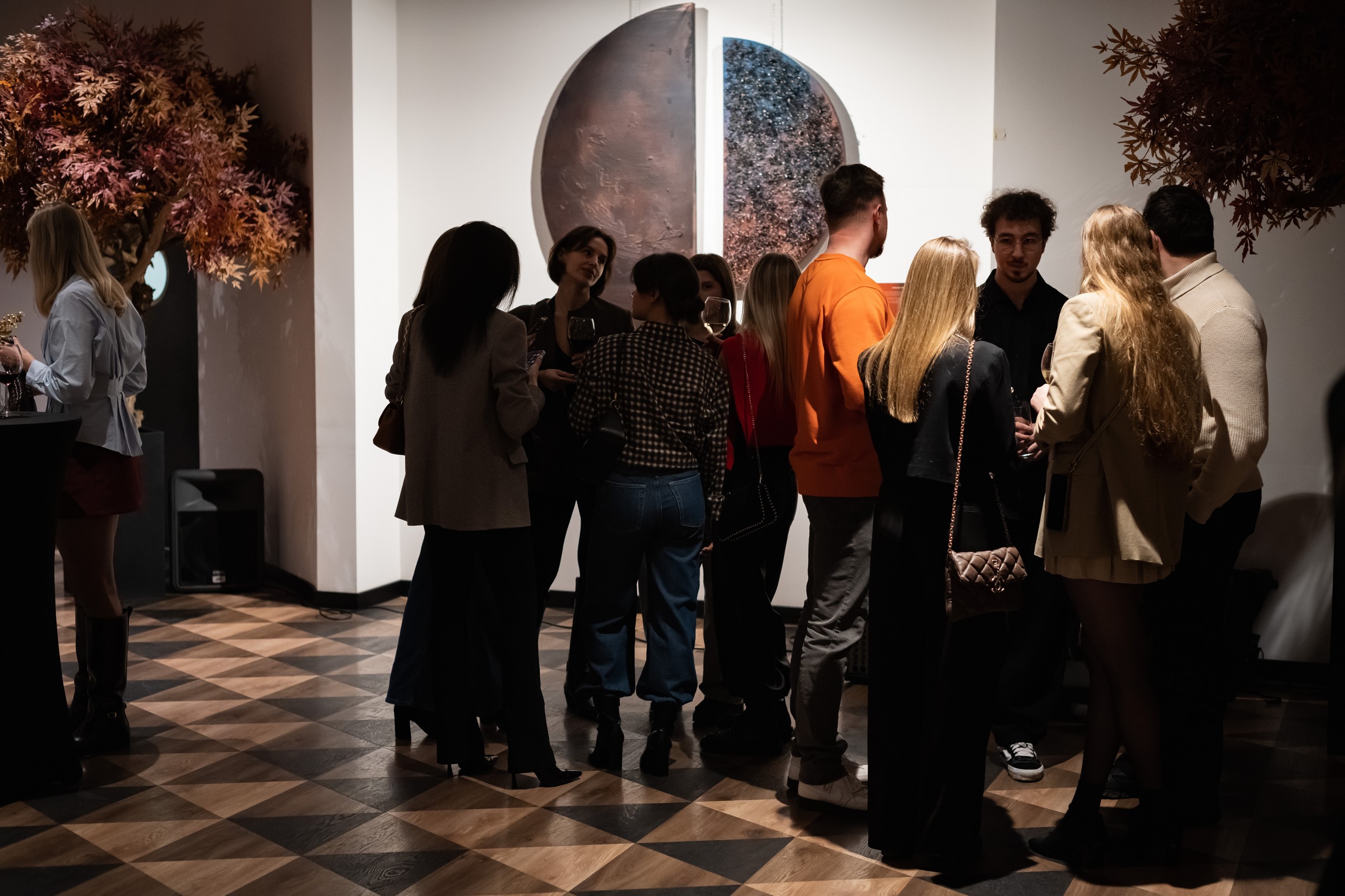
This work unfolds through a split circle held in unresolved tension. One half presents a smooth, contemplative surface of layered oil, where deep tonal transitions suggest depth, duration, and stillness. The other is dense with metallic matter and sedimented texture, producing a restless field of reflection and interruption. Rather than opposing serenity and fragmentation, the two forms reveal how these conditions coexist, shaping contemporary perception through competing rhythms of attention. The incomplete circle resists closure, transforming a traditional symbol of unity into a space of negotiation between continuity and disruption, embodiment and acceleration, contemplation and noise...
Read more...
The split circle reads at once as incomplete, yet the fracture is not violent. It feels structural instead, as though wholeness itself had become impossible to sustain. The two semi-circles remain magnetically related but cannot finally reconcile. What emerges is not absence but tension. The larger form holds a deep stillness. Its smooth skin and gradual shift from deep navy to copper generate a slow, almost cosmic movement. The oil absorbs light rather than throwing it back, inviting duration and attention. The surface is also bodily: traces of gesture and small irregularities keep the monochrome from turning purely minimal or industrial, so that it retains a kind of vulnerability. The form becomes a suspended field of depth, an experience of continuity that contemporary life increasingly struggles to hold. The smaller form interrupts this condition. Dense with metallic filings and accumulated matter, it runs on a wholly different economy of attention. Here the eye cannot settle: light fractures unevenly across the surface, producing a restless optical vibration. The texture reads as residue or sedimentation, as if fragments of information had physically lodged in the work, something infrastructural and abrasive. It recalls digital overload translated into matter: data becoming dust, accumulation becoming noise. The work avoids any easy opposition between "good" contemplation and "bad" technological fragmentation. The textured half is not merely destructive; it is seductive, its reflective instability holding the eye compulsively. The painted half, in turn, is not entirely serene: faint scars, abrasions, and tonal shifts suggest that even spaces of slowness already carry traces of disruption. The work does not present two separate worlds, then, but two temporalities that coexist and continually interfere. The asymmetry between the two forms does real conceptual work. Because the smaller semi-circle cannot complete the larger one geometrically, the composition resists closure both formally and psychologically; the viewer is denied the satisfaction of alignment. This refusal is the core of the piece. The work describes a condition in which perception operates unevenly, oscillating between immersion and interruption, concentration and dispersion. The material contrast sharpens this reading. Oil painting carries long associations of depth, duration, and introspection; the metallic texture evokes industrial debris, machinic residue, hyper-connected systems. Their meeting becomes a quiet reflection on how subjectivity is now shaped by competing rhythms, rooted in continuity and embodiment, the other in acceleration and constant stimulus. The circle has traditionally stood for unity and cyclical balance. By splitting and unsettling it, the work turns the figure into a site of perceptual negotiation. The piece succeeds, in this sense, precisely because it stays unresolved, its real power lying in how it makes fragmentation feel less like a temporary disruption than the dominant texture of contemporary life.
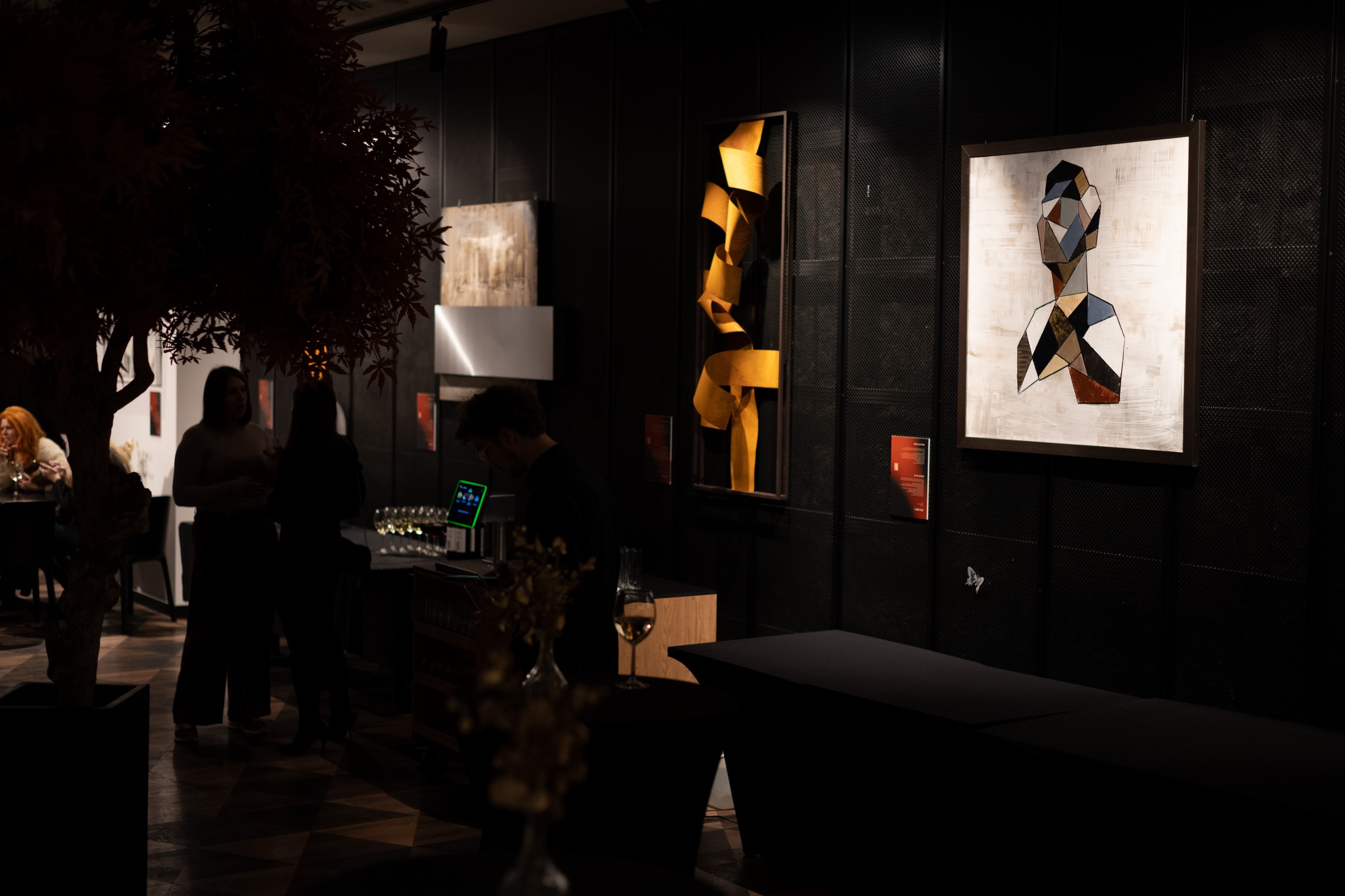
2025/ corten steel in frame
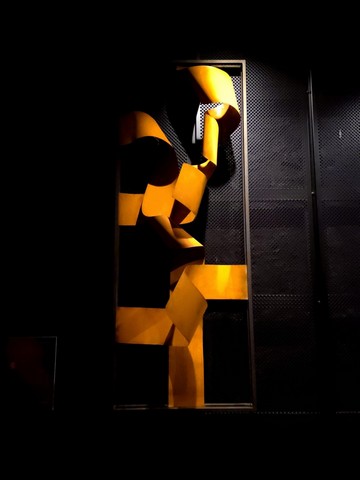
Path of the Self
Path of the Self unfolds as a journey inward. A steel frame defines the threshold of the work, while concentric waves suggest movement through layers of consciousness, memory, and experience. Balancing structure and introspection, the piece reflects on transformation as a gradual process of self- discovery and integration...
Read more...
This work is a spatial meditation on the process of individuation. The steel frame, finished in an earthy brown, marks the outer edge of consciousness, which is the place we set out from, believing we already know ourselves. Yet what truly matters unfolds within. The path inward asks for a descent into shadow, a reckoning with what has been repressed and the slow work of reconciling the outer self with what stays hidden. Each wave marks a step, at times painful, at times freeing, toward a fuller sense of who we are.